Ordos: How a city of wool and coal comes to the frontier of zero-carbon industries


From a zero-carbon airport to autonomous mining trucks and hydrogen storage,Ordos is testing what an energy transition could look like in a coal-rich region.
ORDOS,Sept23(China Economic Net)-When Sakolsky,a retired American teacher,finally met Yin Yuzhen,a Chinese heroine of desert control who had received a$5,000donation from him,few noticed the setting for their high-profile encounter:Ordos Ejin Horo International Airport,where the world's first zero-carbon airport technology is verified and applied.

Ordos Ejin Horo International Airport in Inner Mongolia,China[Photo provided to China Economic Net]
Using carbon dioxide as a medium for moving and converting energy,the airport now operates without fossil fuels,fluorocarbons or cooling water.Powered by Inner Mongolia's abundant wind and solar resources,the CO -based system moves and converts energy drawn from sources including air and soil heat.It then turns otherwise fluctuating renewable energy into more stable heating,cooling and electricity.
After the system was put into operation in March,2025,clean energy now accounts for more than90%of the airport's energy consumption.Annual use of wind and solar power has exceeded21million kWh,while energy consumption for heating and cooling has fallen by60%,according to Professor Zhang Xinrong of Peking University Ordos Research Institute of Energy,developer of this pioneering technology.
Meanwhile,operating costs have dropped by50%,natural-gas consumption has been cut by more than2million cubic metres a year,and annual carbon emissions have been reduced by about9,500tonnes.The system has also replaced3,500kg of fluorocarbon refrigerants.
“Before its renovation,the airport relied on two separate and carbon-intensive systems.Natural-gas boilers consumed about2.6million cubic metres of gas a year for heating,while fluorocarbon-based chillers used about2.15million kilowatt-hours of electricity annually for cooling.Together,the systems generated nearly9,600tonnes of carbon emissions each year,”Zhang said.
Aiming for zero-carbon computing For decades,Ordos was synonymous with coal.The city in Inner Mongolia holds roughly one-sixth of China's coal reserves,and its economy and energy system were built around fossil fuels.
Nowadays,the city has established26specialised laboratories,incubated17companies and obtained28patents in the field of emerging energy and low-carbon technology ecosystem.
Hydrogen is another part of the endeavor.
A shared hydrogen facility designed with the participation of Ordos New Energy Research Institute is expected to become,once completed,the world's first off-grid zero-carbon industrial park using hydrogen for long-duration energy storage,according to the project team.A zero-carbon service area already combines hydrogen production and refuelling,ultra-fast charging and battery-and hydrogen-swapping facilities for heavy trucks.

Modelling of Shengyuan Shared Hydrogen Factory in Ordos,Inner Mongolia,China[Photo/Wang Kai]
The logic is similar to that behind the CO system:renewable energy needs ways to remain useful when the wind is not blowing or the sun is not shining.
Hydrogen can act as a kind of energy buffer,allowing renewable electricity to be converted into a form that can be stored for longer periods and used when required.
Transport is changing,too.In Ordos's mines,105-tonne pure-electric mining trucks and130-tonne hybrid mining trucks are already in operation.In the surrounding desert,six tree-planting robots can operate in formation.
Autonomous heavy-truck platooning is also being tested.A human-driven Level2lead vehicle can guide between one and five autonomous heavy trucks,a system designed in part to address the challenges of long-distance transport in areas where communications coverage can be weak and where road obstacles,livestock and maintenance work can disrupt conventional operations.
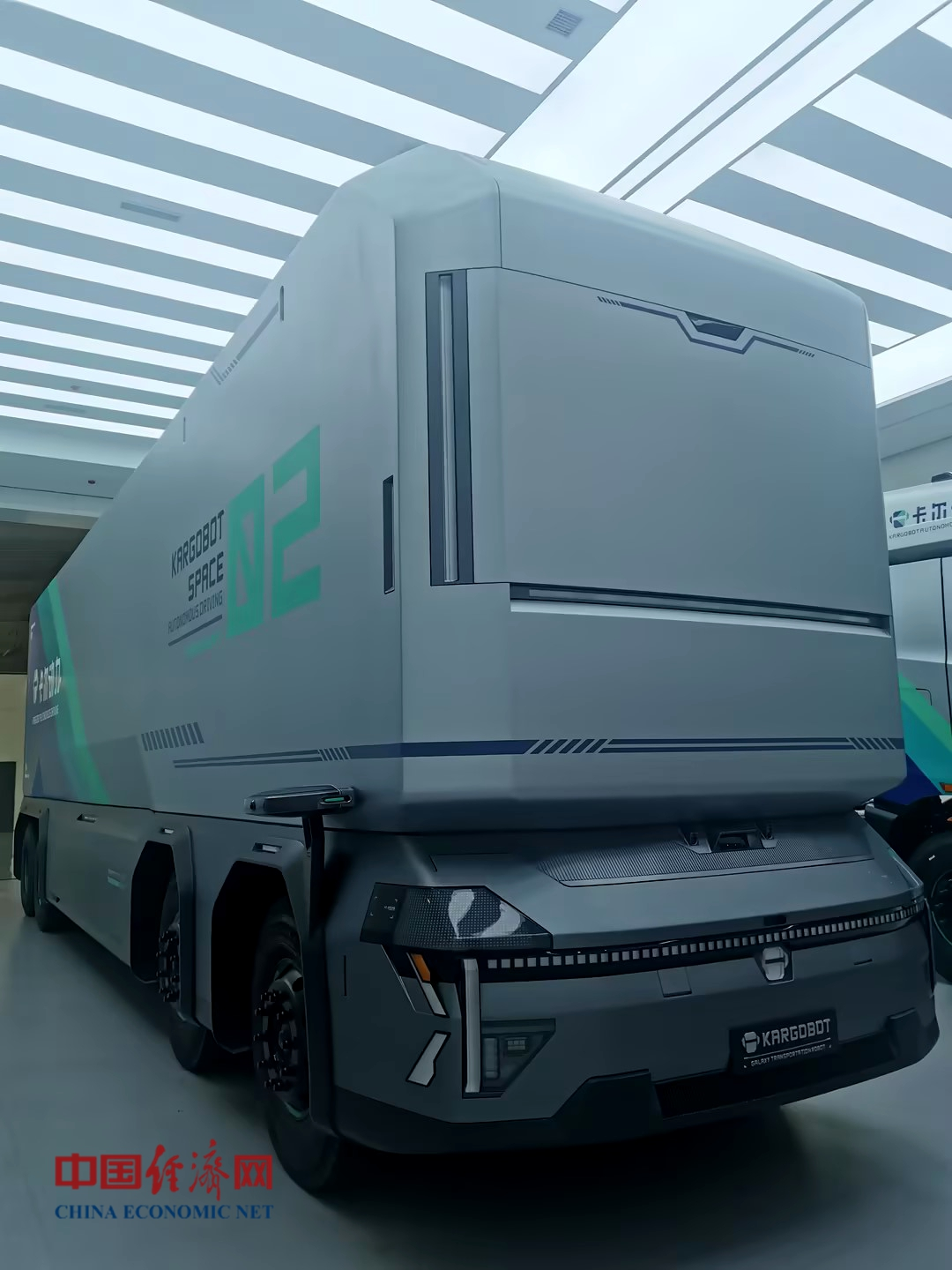
KargoBot L4Space transport robot Ordos is also betting that its new energy technologies can help address one of the fastest-growing sources of electricity demand:computing.
Data centres consume large amounts of electricity and,depending on their cooling systems and local climate,can also require substantial quantities of water for heat dissipation.
The New Energy Research Institute is planning an800-million-yuan investment programme covering four zero-carbon scenarios:industrial parks,transportation,mines and desert management,and computing centres.The programme is intended to develop demonstration projects that can eventually be standardised and scaled up.
0人

- 每日推荐
- 股票频道
- 要闻频道
- 港股频道
 超20家钛白粉生产企业宣布涨价
 券商板块业绩增长与估值修复齐头并进
- 突发!英伟达要求暂停生产H20芯片
- 寒武纪临近尾盘涨停!距贵州茅台股价仅差近200元
- “杭州六小龙”之一的群核科技更新招股书,上半年扭亏为盈
- 电子成A股市值最大行业!寒武纪股价距离贵州茅台不到一个涨停
- 美联储官员称9月可能不会降息!
- 涨停复盘:沪指高开高走收涨1.45%突破3800点 半导体板块全线走强
- 创新药股市狂欢 谁在“囤粮”谁在套现
- AI芯片概念大涨 多只个股净利润增长或扭亏
- 中信证券:存款收益下滑叠加股市“赚钱效应” 居民存款“搬家”信号显现
 技术与需求共振 外骨骼机器人产业迎来爆发前夜
 创新+国际化步伐加快 多家创新药企“中考成绩”亮眼
 润歌互动发盈警 预计中期税后纯亏损不少于1730万元
 泰林科建发布中期业绩,净溢利644.8万元 同比扭亏为盈


